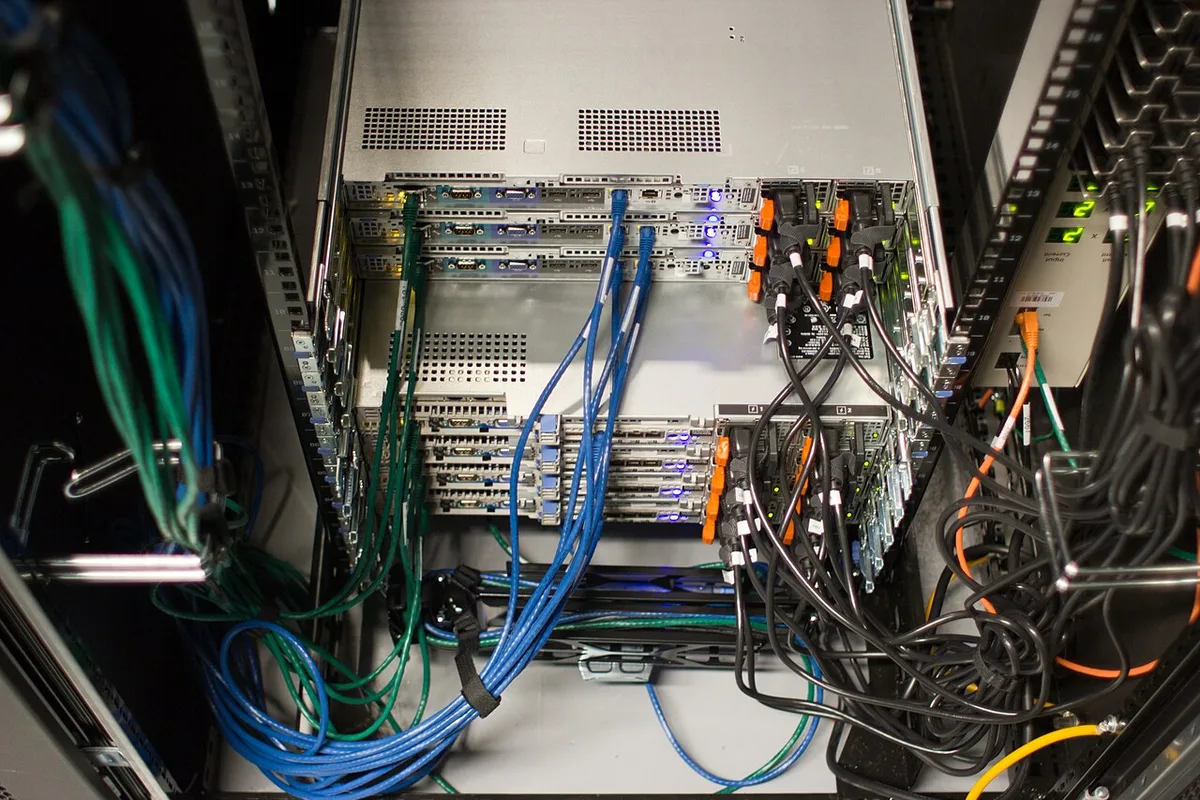
- Count aggregate pools across all application instances.
- Pooling modes can change session-level assumptions.
- Measure acquisition wait separately from query execution.
A pool is an admission mechanism
An application becomes slow, so someone increases its database connection limit. The change may help if the old pool unnecessarily restricted useful work. It may also send more simultaneous work to an already saturated database and make every request slower. A connection pool controls how requests gain access to database sessions. It does not create CPU, storage bandwidth, or efficient queries. The useful sizing question is how much concurrent database work the service can complete while meeting its response objective.
PgBouncer documents several pooling modes with different relationships between clients and server connections. PostgreSQL’s community guidance also discusses why connection count is not a simple measure of capacity. These references establish the mechanisms and tradeoffs, while the right configuration depends on the workload and deployment. A pool should be treated as part of the system’s queueing design, with explicit limits and observability, rather than a number that grows whenever a request waits.
The total is larger than one configuration file
A service may have a pool in every process, several processes per instance, and many instances after autoscaling. Background workers and administrative tools can add more connections. A local maximum that looks modest can become a large aggregate demand. Map the full topology before changing a limit. Include deployment overlap, when old and new instances coexist, and recovery scenarios that start several processes at once. The database sees the combined result, not the setting in one application repository.
For a hypothetical reporting product, web requests and scheduled exports may share the same database while using separate pools. An export burst can consume capacity just as interactive traffic rises. Decide whether the workloads need separate budgets or scheduling. A pool that is perfectly reasonable for either workload alone can be inappropriate when both peak together. Capacity planning should describe the mixture of work and the user experience each class requires, rather than assuming every connection represents an interchangeable request.
Session assumptions determine compatible modes
Transaction pooling can reuse a server connection after a transaction ends, while session pooling retains a closer client-to-server relationship. That difference can affect features that rely on session state. Review the current pooler’s compatibility table and the application driver’s behavior. Prepared statements, temporary state, advisory mechanisms, and configuration changes may have version-specific support. Avoid relying on a general statement that the application uses ordinary SQL. The relevant question is what state it expects to survive between operations.
Test representative workflows through the actual pooler. A direct database connection in development can hide an incompatibility that appears only in production. Include the ORM or driver version and pool mode in the test record. If the application needs a session-level feature, use a supported arrangement rather than attempting to repair intermittent behavior with retries. A retry can make a state mismatch harder to diagnose while occasionally producing a successful result that conceals the underlying assumption.
Separate waiting from execution
A request can spend time waiting for a pool connection before it sends any SQL. It can then wait inside the database for locks, storage, or execution resources. These delays call for different investigations. Measure acquisition time, transaction duration, and query time separately where the stack supports it. A slow endpoint does not establish that the query itself is slow. Conversely, a nearly full pool may be a consequence of long transactions rather than evidence that the pool should be larger.
Look for connections held while the application performs unrelated work. A request may acquire a connection early, call an external service, and return it only after formatting a response. Narrowing that lifetime can reduce pressure without increasing database concurrency. Preserve transaction correctness while making the change. The goal is not to release a connection between statements that must be atomic. It is to avoid reserving a scarce resource during work that does not need it.
Bound the queue and align timeouts
A pool can protect the database by making excess work wait, but an unbounded wait can turn overload into a long period of useless requests. Define how long callers may wait and what error or degraded behavior follows. Align pool, application, and upstream timeouts so abandoned requests do not continue consuming capacity unnecessarily. The user-facing response should be clear enough to support a legitimate retry without suggesting that an uncertain write definitely failed. Read and write workflows may need different handling.
Test demand beyond the intended operating range. Observe whether the system rejects promptly, queues predictably, or enters a spiral of retries and growing latency. A graceful overload response can preserve useful service for more users than accepting every request into an ever-longer queue. Include the retry behavior of clients and background jobs, because a rejection can trigger additional demand. Admission control is a system behavior, not a setting that can be evaluated independently of the callers.
Keep an operational route for authorized maintenance. If every database connection can be consumed by application traffic, diagnosing or correcting an incident may become harder. Use the database and platform’s supported controls to preserve appropriate access without granting broad privileges to the application. Document the route and test it. The objective is controlled recovery, not a hidden bypass that ordinary requests can use whenever the pool is full.
Include connection establishment during restarts in the test. A pool can behave calmly once warm and still create a burst when many application instances start together, so deployment behavior belongs beside steady-state measurements.
Tune against a completed task
Compare a small set of candidate sizes under representative demand. Record throughput, latency distribution, acquisition wait, database pressure, and errors. Keep query plans and workload composition comparable. A higher pool limit may improve one metric while degrading tail latency or increasing contention. Choose the configuration that serves the application objective within its resource budget. Preserve the evidence so future engineers do not have to repeat the same experiment after seeing an unexplained number.
Connection pools are useful because they make concurrency a controllable boundary. Their strongest role is to match application demand to database capacity while keeping waiting and failure understandable. Count every pool, verify session assumptions, shorten unnecessary ownership, and test overload. The right size is not the largest value the server accepts. It is the value that lets the complete service do useful work predictably, with enough visibility to explain where time is being spent.
Sources & further reading
Primary references inform the reporting. Our explanations, scenarios, and conclusions are editorial analysis; source statements are not independent test results.
- PgBouncer: Featureswww.pgbouncer.org
- PgBouncer: Configurationwww.pgbouncer.org
- PostgreSQL wiki: Number of database connectionswiki.postgresql.org
Source publication or reference date: 2026-11-04.
See an error or an important update? Contact the editors.


