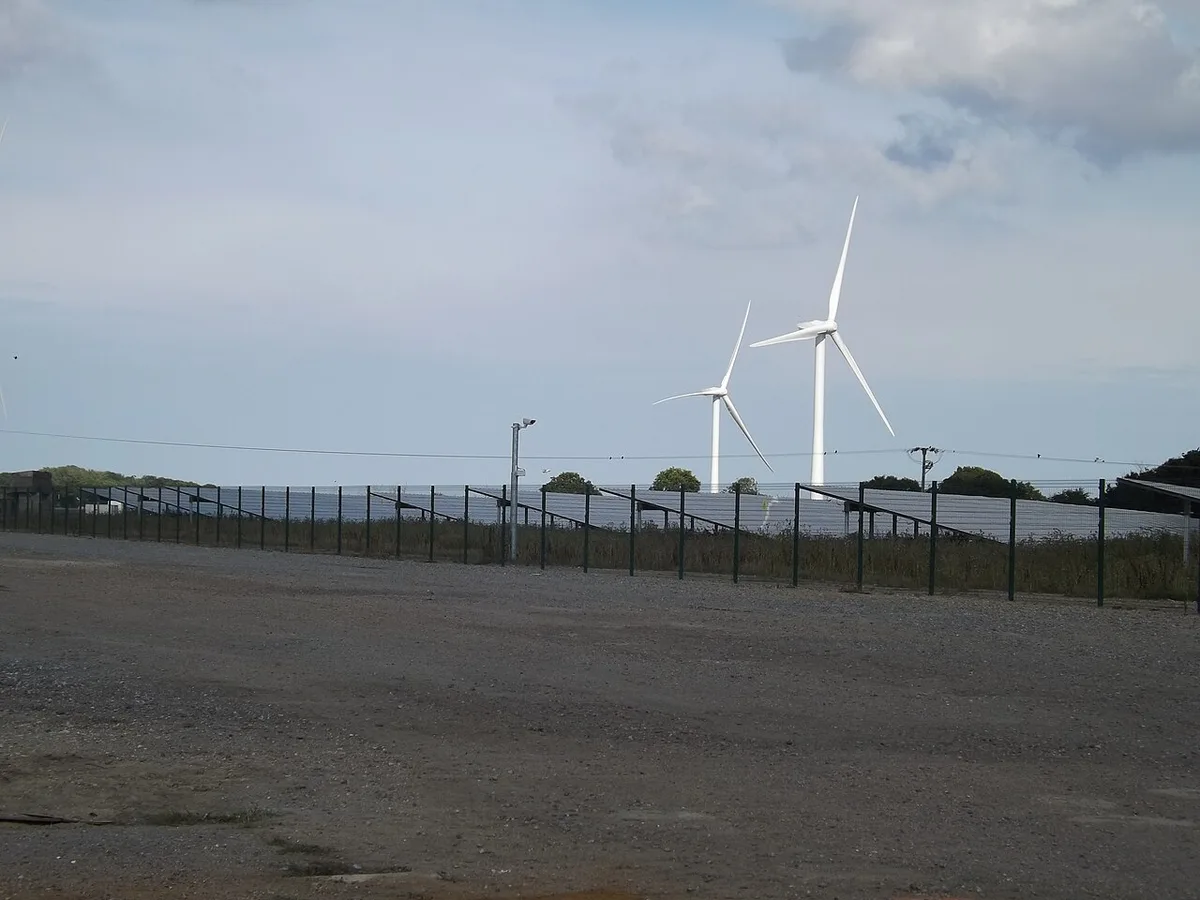
- EIA reports a growing role for solar generation at sites with batteries.
- Storage shifts energy through time and introduces losses; it does not generate additional solar energy.
- Battery power, energy capacity and interconnection limits describe different capabilities.
The trend behind the design question
EIA’s October 30 analysis reports that the share of solar generation associated with co-located battery storage is increasing. The report is a statistical view of a changing fleet, rather than a performance guarantee for any individual project. The engineering interest lies in what shared siting makes possible: a solar plant can route energy through a battery and choose a different time to deliver some of it.
This changes the relationship between sunlight and output. It does not make sunlight continuous, and it does not remove the need to account for charging losses, equipment limits and the amount of stored energy available. Understanding those constraints makes solar-plus-storage claims much easier to interpret.
Power and energy answer different questions
Battery power describes how quickly energy can enter or leave the system. Energy capacity describes how much can be stored. A large power rating can support a strong burst of output while saying little about how long that output can continue.
The familiar comparison is a reservoir and its outlet. The reservoir’s volume and the outlet’s flow capacity are separate characteristics. A storage project needs both to match its intended task. A short-duration response to a grid event can require a different balance from shifting a substantial amount of daytime energy into the evening. Describing a battery by only one rating leaves the reader unable to determine which service it can realistically provide.
A shared connection can be useful and limiting
Solar generation and storage at one site may share parts of the electrical infrastructure. This can make integration attractive, but the grid connection still has a maximum transfer capability. The plant’s internal equipment may be able to produce or discharge more than it can export simultaneously.
This limit can motivate coordinated operation. The battery might absorb energy that would otherwise exceed the available export capacity, then discharge later when the connection has room. However, the result depends on the actual design and operating rules. Co-location alone does not establish that every unit of otherwise constrained solar output can be saved. Charging power and remaining storage space can impose their own boundaries.
Charging losses belong in the accounting
A battery returns less electrical energy than it receives because conversion and internal processes consume some of the input. Supporting equipment also uses power. The benefit of storage therefore comes from the usefulness of energy at a different time or under a different operating condition, rather than from increasing the total energy available.
This distinction is important when comparing projects. A larger delivered-energy figure may reflect a larger solar array, different weather or a different measurement boundary. Readers should ask whether a reported quantity describes generation before storage, energy entering the battery or energy delivered afterward. Clear boundaries prevent an attractive combination of figures from implying an efficiency that the physical system does not have.
Dispatch turns hardware into a service
A storage system needs a policy for when to charge, hold energy and discharge. Those decisions depend on expected solar production, grid needs, operating constraints and the project’s commitments. The same equipment can behave differently under different dispatch objectives.
For example, reserving capacity for a later requirement can reduce the amount available for an immediate opportunity. Charging early may leave less room for an unexpected period of strong solar production. These are forecasting and control tradeoffs, not signs that the battery is malfunctioning. Evaluating performance requires knowing what the operator was trying to accomplish. A low utilization figure can be appropriate for one service and disappointing for another.
Duration should be connected to the task
A battery sized to bridge a brief transition cannot be assumed to cover an extended period of weak generation. Its operating duration depends on output rate and usable stored energy. The usable amount may differ from the nominal amount because the system maintains margins or limits its operating range.
This is why phrases such as firm solar need a defined time interval and set of conditions. A project can make output more predictable within its designed role without replacing every other source of grid flexibility. The honest question is which gap the storage is intended to address and what happens when that gap lasts longer than expected. A clear answer is more informative than an unqualified claim of continuous renewable supply.
Aging changes the available envelope
Repeated use and time can change a battery’s capacity and power behavior. The rate depends on chemistry, temperature and the operating pattern. A project’s long-term plan may include managing its usage, replacing equipment or adding capacity to maintain a required service.
Readers should therefore distinguish initial capability from capability expected later in service. A design that meets a commitment on its first day still needs a plan for subsequent years. The dispatch strategy and thermal management influence that outcome. This connects everyday control decisions with long-term asset performance, making storage operation a continuing engineering task rather than a single installation milestone.
Physical proximity does not establish electrical configuration. Two assets can occupy neighboring land while using different connections and controls. The project description should explain that relationship explicitly, because it determines which integration benefits are actually available.
What to examine in a project announcement
Look for solar capacity, battery power, battery energy and the export limit as separate quantities. Ask whether charging can come from the grid, the solar plant or both, and whether the stated duration uses nominal or usable capacity. These details describe the physical possibilities more clearly than a combined headline rating.
Then identify the intended service and the evidence offered for it. An announcement of construction is different from operating data showing delivery during a particular interval. A seasonal record is different from one successful day. Matching the evidence to the claim lets readers recognize useful progress while avoiding assumptions about capabilities the project has not demonstrated.
A timing technology rather than an energy source
EIA’s reported trend reflects a broader shift toward designing generation and flexibility together. Co-located storage can make solar output more useful in ways that depend on local constraints and operating choices. Its role is best described through those specific services.
The battery’s central function remains straightforward: it moves some energy from an earlier time to a later one, with losses and limits. Once that is understood, the surrounding engineering becomes easier to assess. A good solar-plus-storage project is not defined merely by placing two technologies side by side, but by matching their capacities, controls and connection to a clearly specified need.
Sources & further reading
Primary references inform the reporting. Our explanations, scenarios, and conclusions are editorial analysis; source statements are not independent test results.
Source publication or reference date: 2026-10-30.
See an error or an important update? Contact the editors.