- NASA’s November 2 update describes upcoming maneuvers, not completed flybys.
- A powered flyby combines trajectory geometry with an engine maneuver.
- A successful departure still leaves cruise, arrival and instrument commissioning ahead.
The maneuver described in the latest update
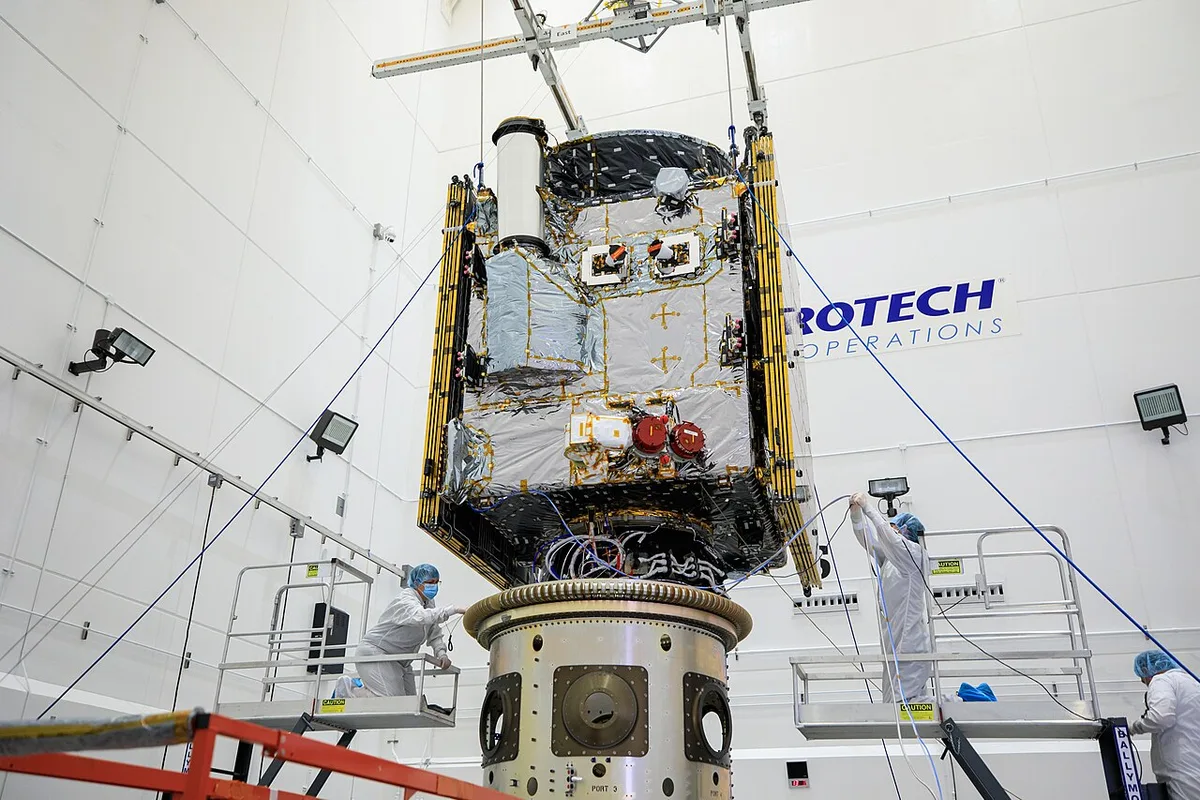
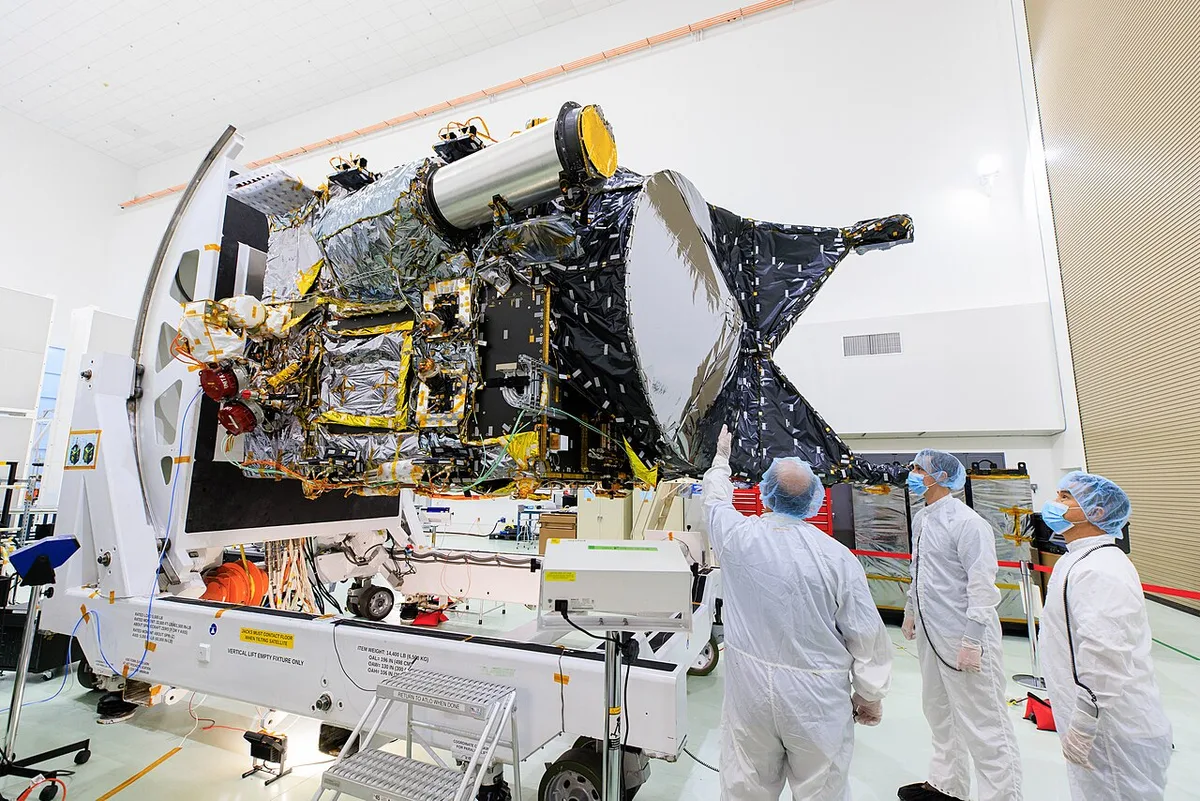
NASA’s November 2 ESCAPADE update describes planned powered Earth flybys for the mission’s two spacecraft as they prepare to head toward Mars. The agency explains that the maneuvers combine Earth’s gravity with engine burns. At the publication date of this article, those events remain upcoming in the cited update. Their successful completion should not be assumed from a schedule. The story is valuable because it makes trajectory design visible: a mission can use its route and timing to achieve something that cannot be described by engine capability alone.
ESCAPADE is also a two-spacecraft mission, so the operation must be carried out for two vehicles rather than treated as a single shared event.
A planet is moving as well as attracting
A gravity assist is often described as borrowing a planet’s gravity, but the encounter’s effect depends on the planet’s motion and the spacecraft’s incoming and outgoing paths. Viewed relative to the planet, gravity bends the trajectory. Viewed in the broader solar-system frame, the spacecraft’s motion can change in a useful way because the planet itself is moving.
The result is geometry-dependent. Passing on a different side or arriving with a different direction can produce a different outcome. This is why a flyby is not a generic boost available whenever a spacecraft approaches Earth. The encounter must be designed to connect the incoming orbit with the desired outgoing path, subject to the vehicle’s limits and navigation uncertainty.
Why an engine burn changes the opportunity
Adding propulsion near a planetary encounter introduces another controlled change in velocity. The useful effect depends on where, when and in which direction the burn occurs. The maneuver is part of the trajectory solution rather than a separate action that can be evaluated without its surrounding orbit.
A mission team must account for engine performance uncertainty and the spacecraft’s orientation during the burn. It also needs observations that establish the actual trajectory afterward. A planned maneuver describes an intention; navigation data show what happened. Keeping those distinct is especially important when a dramatic mission route is communicated through an animation, because the animation can make a future operation appear as settled history.
Waiting in space can be a deliberate choice
A spacecraft does not always depart directly for its final destination as soon as it launches. The relative positions of planets and the available launch opportunity can motivate an intermediate route. Time then becomes a resource used alongside propellant and launch energy.
Waiting is not free. The spacecraft continues to need power, communication and environmental tolerance. The mission must preserve the condition of systems that will be required later. A route that improves departure flexibility may consequently introduce operational demands during the intervening period. These tradeoffs illustrate why mission optimization concerns the whole journey rather than only the shortest travel time or the smallest single maneuver.
Navigation manages a corridor of uncertainty
An orbit estimate is not an infinitely precise line. It contains uncertainty based on measurements and the model of forces acting on the spacecraft. A close planetary encounter can make the relationship between that uncertainty and the outgoing path especially important.
Course corrections help place the vehicle within the intended encounter conditions. The design should include margins and a plan for measuring the result. Readers should therefore expect a sequence of navigation updates rather than one final statement that the spacecraft is aimed correctly. A credible mission account explains how the team checks and refines the route, while distinguishing a predicted trajectory from the estimate reconstructed after an event.
Two spacecraft create separate operational work
Nominally similar vehicles can arrive at a maneuver with different small errors, resource conditions or schedules. Each needs its own state estimate and readiness assessment. Sharing a design does not make their operations interchangeable.
The paired mission also creates opportunities for scientific comparison later, but those opportunities depend on both vehicles reaching suitable operating conditions. A report that one spacecraft has completed a step should not automatically be read as confirmation that the other has done so. This is a simple but important habit for readers following missions described collectively by one name: identify which vehicle each status update actually concerns.
Departure is not arrival
A successful outgoing trajectory is a major milestone, yet the spacecraft still has to navigate cruise and establish the intended state at Mars. Arrival timing, velocity and geometry matter to whether subsequent maneuvers can produce useful orbits. The mission’s sequence remains a chain of dependent operations.
Instrument readiness is another stage. Reaching an orbit does not itself establish the quality of scientific data. Sensors need appropriate configuration, calibration and operating conditions. Following the mission through these separate milestones produces a clearer account of progress than declaring success at the most visually dramatic maneuver and assuming the scientific objective will follow automatically.
What readers should watch after the flybys
Look for explicit confirmation of each maneuver and a statement about the resulting trajectory. A successful engine firing and an acceptable navigation outcome are related but separate pieces of evidence. Later updates may refine the estimate as more observations become available.
Avoid interpreting a minor correction as evidence that the entire plan failed. Navigation is a continuing process, and planned opportunities for adjustment are part of a robust design. The important question is whether the mission remains within the conditions required for the next stage. That assessment is more informative than demanding a perfectly unchanged line from the first published animation.
A useful way to read a trajectory graphic is to identify its reference frame. A route drawn relative to Earth can look different from the same motion drawn relative to the Sun. Neither view is inherently wrong; each emphasizes a different relationship. Labels and dates are therefore part of the explanation, not decorative additions to the picture.
The broader lesson of the route
ESCAPADE’s planned encounters show why propulsion is not just an engine specification. Useful motion emerges from the interaction of hardware, celestial geometry, timing and navigation. A mission can gain flexibility through a route that appears indirect, provided the full system can support it.
NASA’s update should be read as a description of the next carefully prepared step. It is not yet evidence of that step’s outcome. The most useful way to follow the mission is to keep the schedule, the executed maneuver and the reconstructed trajectory separate, then connect each with the scientific work that the journey is intended to enable.
Sources & further reading
Primary references inform the reporting. Our explanations, scenarios, and conclusions are editorial analysis; source statements are not independent test results.
Source publication or reference date: 2026-11-02.
See an error or an important update? Contact the editors.