- A received packet and a current spacecraft state are not the same thing.
- Timing, units and configuration give telemetry its meaning.
- Command handling needs a clear distinction between sent, accepted and executed.
The current reference and the everyday problem
NASA’s 2026 ground-data and mission-operations reference surveys the infrastructure supporting spacecraft on Earth. The subject can look like ordinary information technology until a delayed or misinterpreted value changes a real operational decision. This article explains the data relationships behind a trustworthy status display. It does not claim to have audited a specific mission system or announce a new operations product.
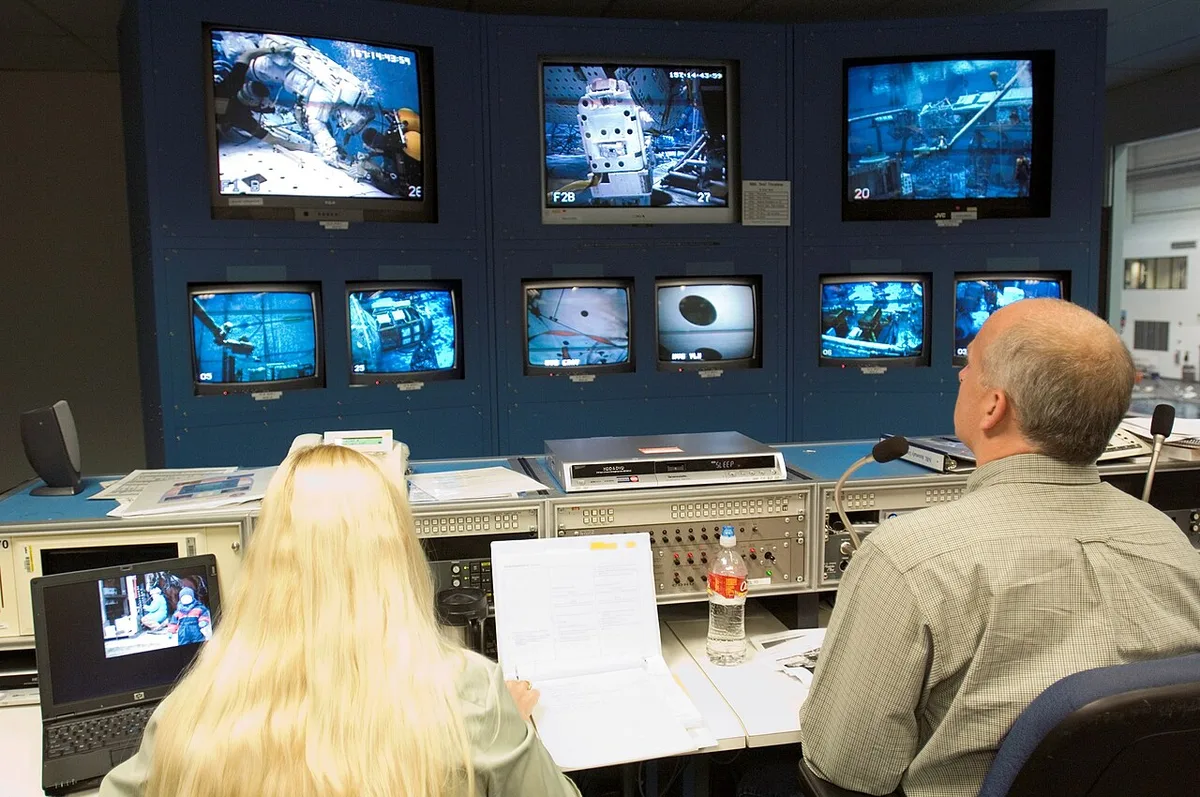
A control room receives messages, but operators need to understand physical state. The path between those two things includes decoding, timing, calibration and knowledge of the vehicle’s configuration. A polished dashboard is useful only if that path preserves meaning.
A timestamp needs an event definition
A record can be timed when a measurement is taken, when a packet is assembled, when it is transmitted or when it reaches the ground. These are different events. Communication delay and onboard storage can separate them substantially.
A display should make clear which time applies. Otherwise, a recently received value may be mistaken for a recent measurement. This is especially important when operators compare several streams or reconstruct a sequence. Synchronizing the clocks is necessary, but so is defining what each clock reading describes. A timestamp without that definition can be precise and still leave the central question unanswered.
Raw values need a known conversion
An instrument may transmit a count or encoded value that must be converted into a physical unit. The conversion can depend on calibration, operating mode and hardware version. A number’s meaning is therefore tied to information beyond the packet field itself.
Ground software should preserve that relationship and make configuration changes traceable. If a calibration table changes, later analysis may need to know which version produced an earlier display. This is not merely a concern for scientific publication. An operator judging a temperature or voltage limit needs confidence that the displayed value reflects the intended conversion and unit, rather than a plausible-looking result from an outdated definition.
Current state is an estimate built from observations
A spacecraft cannot usually report every physical property continuously. The ground system assembles a picture from available telemetry, models and known commands. Some values become stale between contacts, while others may be inferred rather than measured directly.
The display should distinguish these cases. A status inferred from the last command is not the same as a status confirmed by a sensor. A predicted battery level is not the same as a fresh reading. Showing age and source can prevent a useful estimate from being treated as an observation. This makes uncertainty operationally visible instead of hiding it behind an unchanging green indicator.
Sending a command is only one step
A ground system can prepare and transmit a command without the spacecraft receiving it. The spacecraft can receive a command without accepting it, and accept it without completing the requested physical action. Each stage needs an appropriate form of confirmation.
A clear operations record preserves those distinctions. It prevents an operator from assuming that a successful network transaction establishes a successful mechanism movement. The relevant confirmation depends on the command: a software acknowledgment may establish acceptance, while a sensor or later telemetry establishes execution. Designing those checks before an anomaly occurs makes troubleshooting much more disciplined when communication is intermittent or delayed.
Logs should preserve the chain of decisions
When an unexpected condition appears, investigators need to know what information was available and what actions were taken. A useful log connects commands, configuration, received data and operator decisions in a coherent sequence. Separate records with incompatible timestamps can make that reconstruction difficult.
The goal is not to collect an unlimited volume of uninterpretable events. It is to preserve the context that affects causality. Automated retries, parameter changes and alarm acknowledgments can matter. If the system hides them for the sake of a tidy display, it can remove evidence needed to understand why the spacecraft behaved as it did. Good operations software makes the important sequence inspectable.
Alarms need a physical interpretation
A threshold crossing can indicate a real problem, a transient condition or a measurement issue. The alarm design should consider persistence, operating mode and the consequences of missing or overreacting to the event. More alarms do not automatically mean better monitoring.
A useful alarm provides enough context to guide the next decision. It identifies the value, time, relevant limit and surrounding state. Operators should know whether the condition is newly observed or based on stale data. This turns monitoring into a meaningful interface with the physical system rather than a stream of notifications whose significance has to be rediscovered during a demanding moment.
A concrete example of a misleading fresh value
Imagine a spacecraft storing temperature records during a contact gap and transmitting them later in a batch. A dashboard that labels each with only the arrival time could make an old cold interval appear to be happening now. The packets are valid, yet the operational interpretation is wrong.
Preserving measurement time and arrival time separately resolves the ambiguity. The same example shows why completeness matters: missing records should remain recognizable instead of being silently connected by a smooth line. A professional data system makes the difference between observed points and interpolated presentation clear enough that an operator does not mistake a visualization choice for physical evidence.
A useful verification test feeds the ground system a known sequence containing delayed packets, changed calibration and a command that is accepted but not completed. Reviewers can then check whether the display preserves each distinction. This is more revealing than demonstrating only a nominal live connection. It tests the meaning of the information, not just the software’s ability to render it. Keeping the reference sequence makes later updates easier to assess because the team can repeat the same test after changing a decoder or dashboard.
The useful output is understandable state
Ground infrastructure converts communication into a basis for action. Its quality depends on preserving time, units, configuration and evidence of execution. A spacecraft can transmit perfectly while a poorly interpreted display still misleads its users.
NASA’s current reference is a starting point for exploring those responsibilities. For technology readers, the enduring lesson is to ask what each number and status actually represents. A trustworthy mission interface makes that answer available, allowing operators and later researchers to connect a record on Earth with a specific event or condition in the spacecraft.
Sources & further reading
Primary references inform the reporting. Our explanations, scenarios, and conclusions are editorial analysis; source statements are not independent test results.
Source publication or reference date: 2026-05-07.
See an error or an important update? Contact the editors.