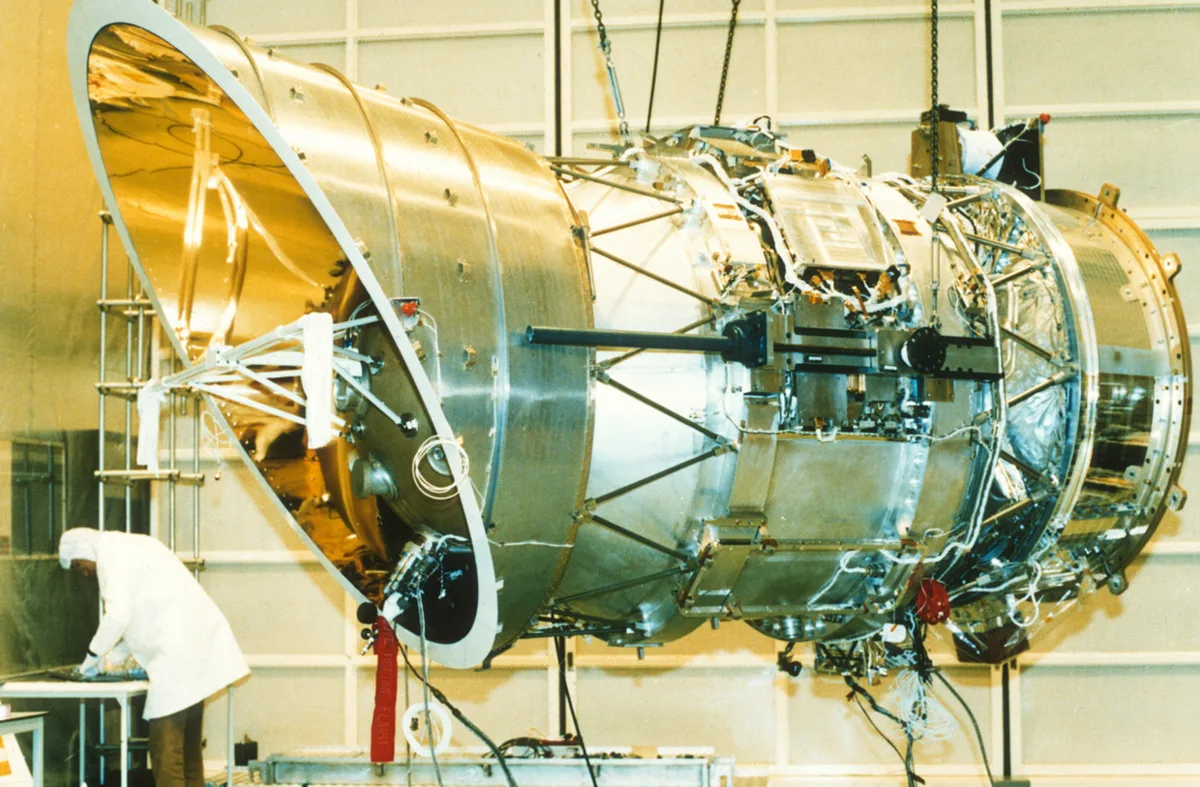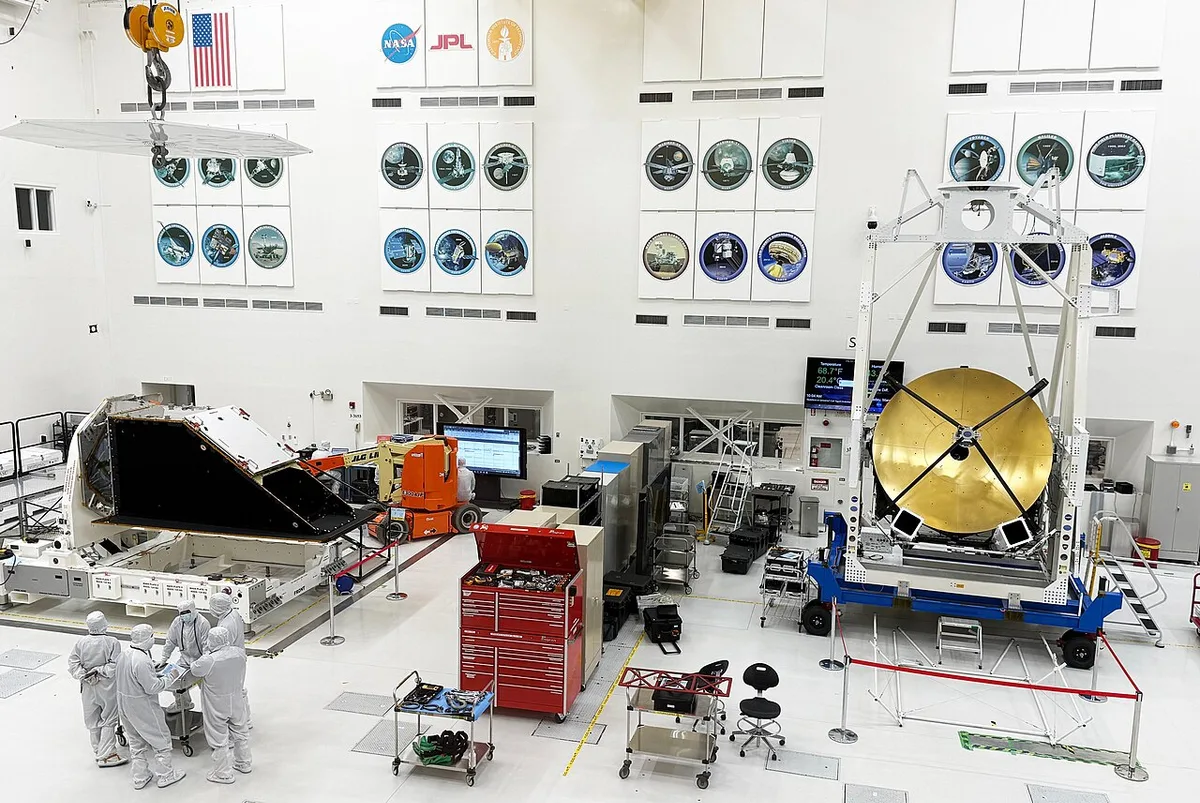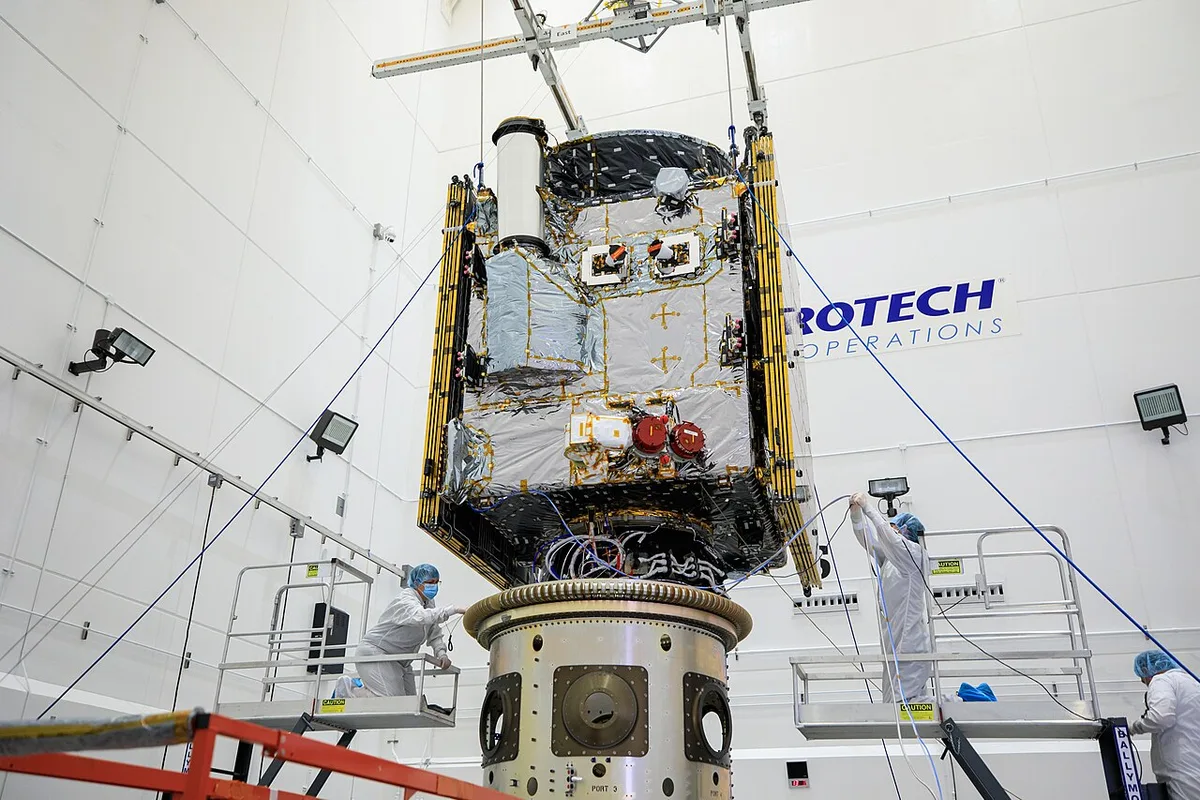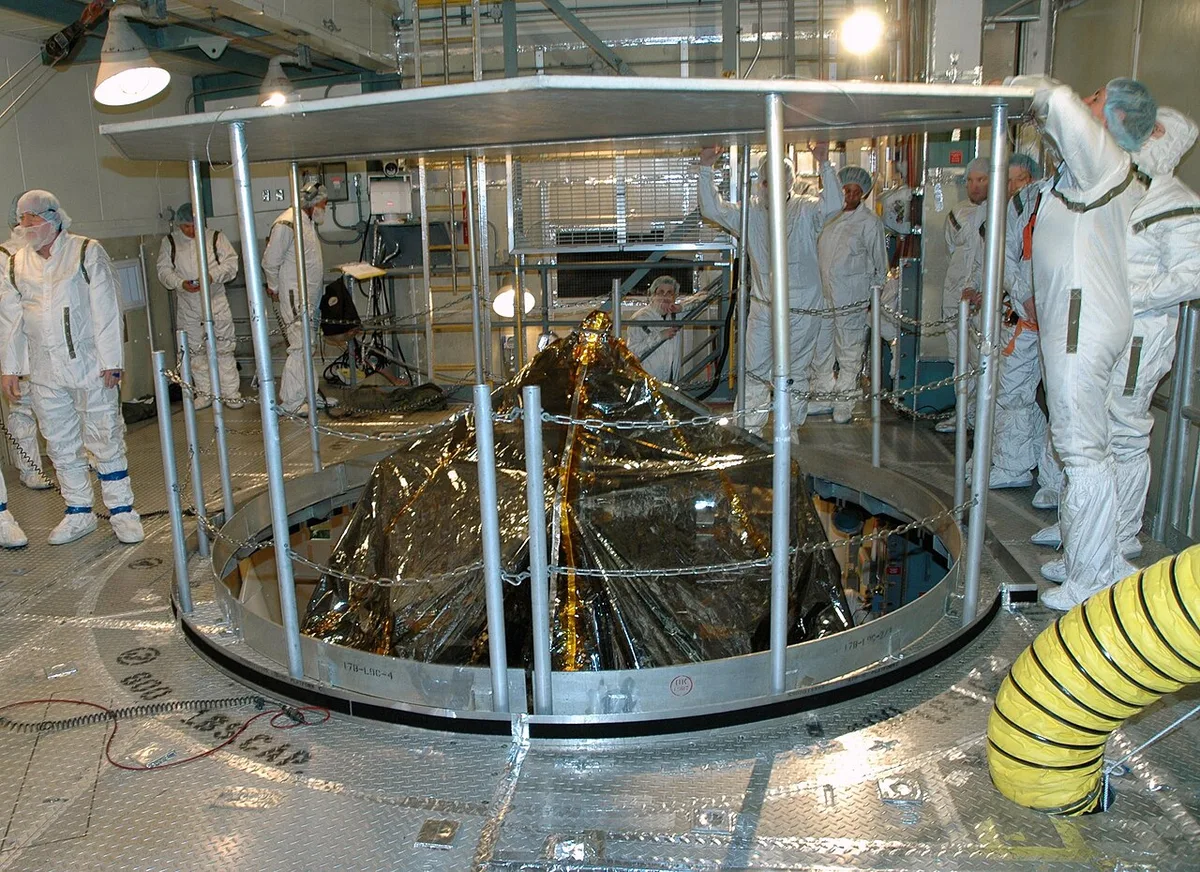
- NASA reports solar-array integration and tests on the NEO Surveyor sunshade.
- Infrared observations depend on controlling the instrument’s own thermal environment.
- A multifunctional structure needs verification of power, pointing and thermal behavior together.
The component in the recent update
NASA’s October 26 NEO Surveyor update describes integration of solar cells onto the mission’s large sunshade and associated inspection and testing. The structure is intended both to protect the infrared telescope from sunlight and to support electrical power generation. These are hardware-development milestones, not evidence that the telescope has begun its planned asteroid survey. The update is interesting because two essential spacecraft functions occupy the same large structure.
A sunshade can look passive in a photograph, yet its geometry helps determine what the telescope can observe and how the spacecraft manages heat and energy. Understanding that relationship reveals why such a component deserves substantial integration work.
An infrared telescope also sees its surroundings
Objects emit thermal radiation according to their temperature and properties. An infrared detector seeking faint external signals must operate within an environment whose own emission and stability are controlled. Unwanted radiation from nearby equipment can complicate the measurement.
Cooling and shielding are therefore part of observation quality rather than optional supporting conveniences. A telescope cannot obtain a useful result solely because its detector is sensitive. It needs an optical and thermal arrangement that makes the desired signal distinguishable from backgrounds. This explains why sunshades, baffles and temperature control can be central scientific components even though they do not form the final image directly.
Blocking sunlight is a geometric requirement
A shade works through the relationship between the Sun, the protected equipment and the vehicle’s orientation. The design must preserve that relationship over the intended pointing range. A structure large enough for one direction may leave an unwanted path for light or heat at another direction.
This makes observing constraints part of the thermal design. The mission may need to limit where it points or how it moves between targets. Those limits should be included when evaluating survey capability. A telescope’s field of regard is not established only by how far a mechanism can rotate; it also depends on whether the rest of the spacecraft can maintain acceptable power and thermal conditions in the resulting attitude.
Solar cells want a useful view of the Sun
Power generation benefits from appropriate illumination, while the telescope needs protection from that illumination. Combining the functions requires surfaces to face and shield in compatible ways. The available electrical output changes with orientation and operating conditions.
A power budget should account for conversion, storage and the loads that operate at different mission stages. Peak array output is not the same as continuous available power for every instrument. A spacecraft may need margins for aging, interruptions and changes in temperature. Evaluating the integrated structure means checking that the observing plan remains compatible with the energy plan, rather than assuming that mounting cells on a large panel automatically resolves the issue.
Thermal paths do not stop at the visible panel
Heat can move through structural connections and radiative exchange between components. A shielded telescope can still receive energy through an unintended path. The design must examine the complete arrangement, including interfaces that are small or difficult to see in a photograph.
Materials and surface finishes influence these exchanges. Their behavior can also change with contamination or exposure. This is why integration testing and thermal models work together. A model predicts the temperatures and flows that matter, while measurements help establish whether the assembled hardware follows those assumptions. Agreement in one configuration supports confidence in that configuration, with additional evidence needed for the rest of the intended operating envelope.
Large structures create handling and alignment work
A substantial spacecraft component needs supports and procedures during assembly and transport. Its final alignment must remain consistent with the optical and power requirements. Small geometric changes can matter when the component defines a boundary between illuminated and protected regions.
The verification process should connect dimensional checks with functional tests. A structure can look correct while an electrical connection or a sensor configuration remains unsuitable. Conversely, a functioning array does not prove that every protected component has the intended thermal view. The integrated evidence needs to show that the structure’s several roles remain compatible after the full sequence of handling, environmental exposure and installation.
Survey performance is more than detector resolution
An asteroid survey depends on coverage, repeated observations and the ability to distinguish moving sources. Detector resolution is one ingredient, while observing geometry and thermal stability influence which signals can be measured reliably. A hardware update should not be converted directly into a claim that a particular object has already been found.
The scientific pipeline also needs calibration and processing. Measurements in multiple conditions can help constrain an object’s properties, but interpretation retains uncertainty. A professional account keeps the instrument’s designed capability separate from the results that will eventually be produced in operation. That separation makes the hardware progress easier to assess without diminishing the mission’s purpose.
What to inspect in later readiness reports
Look for evidence connecting power output, thermal behavior and the allowed pointing conditions. Determine whether a reported test concerns the sunshade alone or its interaction with the assembled spacecraft. Each has value, but the integrated result addresses additional dependencies.
It is also useful to ask what was checked after environmental testing. A component may survive structurally while a connection or sensor requires attention. A complete readiness account explains which functions were verified and which stages remain. The result should support a traceable claim about the actual hardware rather than a broad adjective such as flight-ready without a defined meaning.
A helpful way to read a thermal diagram is to trace every surface visible to the detector and every solid connection leading toward it. The protected region is defined by those paths, not by the visual impression that a large panel stands nearby. This exercise explains why an apparently minor bracket or exposed surface can deserve attention. It also helps distinguish a verified optical shadow from the broader problem of maintaining a sufficiently quiet thermal environment.
A passive-looking component with an active mission role
NEO Surveyor’s sunshade illustrates how a spacecraft can combine functions to use mass and space efficiently. That efficiency depends on an agreement between geometry, energy and observation requirements. Sharing a structure makes the connections more important, not less.
The October update is best understood as progress in realizing that agreement physically. Future operational results will establish the telescope’s survey performance. For readers, the enduring lesson is to look beyond the most sophisticated sensor: a sensitive instrument becomes useful only when the surrounding spacecraft supplies the light control, temperature stability and energy needed for a trustworthy measurement.
Sources & further reading
Primary references inform the reporting. Our explanations, scenarios, and conclusions are editorial analysis; source statements are not independent test results.
Source publication or reference date: 2026-10-26.
See an error or an important update? Contact the editors.