- Launch, deployment and commissioning establish different milestones.
- A deployer interface constrains the spacecraft’s physical and operational design.
- First-contact planning depends on power, orientation, timing and ground readiness together.
The engineering context for a shared ride
NASA’s 2026 integration, launch and deployment reference surveys how small spacecraft reach their operating environment. Shared launches create opportunities, but each payload still needs its own verified path from an integrated launch configuration to independent operation. This article explains that sequence rather than reporting a new launch. The aim is to make mission status language precise enough that readers can distinguish transportation, release and useful function.
A rocket can perform successfully while a particular spacecraft still has work ahead. That does not diminish the launch milestone. It clarifies which part of the mission has been achieved and which dependencies now move onto the spacecraft and its operators.
The interface starts before the launch date
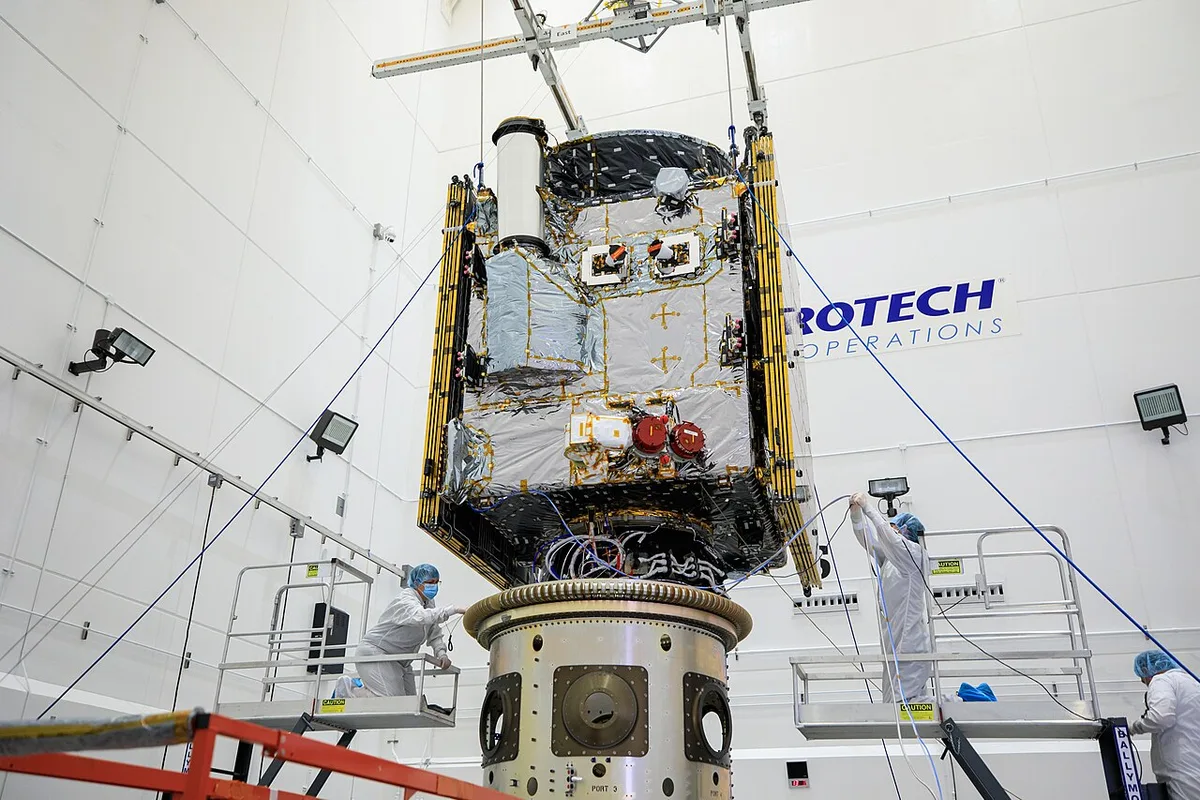
A deployer or mounting system defines geometry, mechanical connections and conditions that the payload must respect. The spacecraft design needs to fit those requirements while preserving access for assembly and verification. A late mismatch can affect more than whether the box fits in the available space.
Electrical inhibits, protrusions and the behavior of deployable hardware can all be relevant to integration. The system must remain in an appropriate configuration before release and transition afterward in a controlled way. This is why launch integration is an engineering relationship rather than merely booking a seat. A payload and its carrier need a consistent understanding of interfaces and states across the full sequence.
Release creates motion as well as separation
A deployment mechanism establishes an initial relative motion between the spacecraft and its carrier. The resulting orientation and rotation affect what the vehicle can do immediately afterward. Small differences in the release can matter to early sensing, power and communication.
A mission should therefore plan for an acceptable range of initial conditions rather than one perfectly scripted pose. Sensors and control need to bring the vehicle toward a usable state. The evidence for a deployment mechanism should connect mechanical behavior with that range. Merely showing that a door opens does not establish that the released spacecraft begins within every condition assumed by its subsequent operations.
Power is needed before the mission is comfortable
Immediately after release, the spacecraft may not yet have its ideal orientation or fully deployed generation surfaces. It must support startup and stabilization with the resources available in that initial state. The sequence should preserve enough energy to reach a condition in which generation and operations become sustainable.
This is a reason to examine startup demand and delays carefully. A payload can have a healthy routine power budget while its first interval remains demanding. If a deployment or stabilization step takes longer than expected, the vehicle needs an appropriate response. Mission readiness includes that early resource path, not only the electrical balance calculated for a fully commissioned spacecraft.
An antenna needs a useful geometry
A radio may function correctly while its antenna points poorly or remains in a configuration with limited performance. Ground visibility and the vehicle’s orientation affect when contact can be established. The expected first signal is therefore a combined spacecraft and ground-station event.
A communication plan should account for uncertainty in deployment time and initial orbit information. Operators may need to examine several candidate contacts before identification becomes clear. Readers should avoid treating an absence of an immediate public signal as proof of failure. The relevant comparison is with the mission’s expected contact opportunities and recovery plan, which may allow a longer interval than a launch broadcast suggests.
Identification matters on a shared launch
Several objects can enter related orbits through one mission. Tracking observations and communication signatures help associate each with the correct spacecraft. Until that association is established, an operator may have uncertainty about which predicted path describes its vehicle.
This affects contact scheduling and the interpretation of early observations. A mission that carries suitable identification features can make the association easier, but those features need to work within the actual tracking and communication infrastructure. The task is not completed merely by assigning a name before launch. The physical object in orbit must be connected with that identity through evidence the relevant systems can observe.
Commissioning should advance through checkable states
Once contact exists, a spacecraft still needs to verify sensors, controls and payload behavior. A deliberate sequence helps establish a known state before demanding operations begin. Each step should have observable completion criteria and a response if the expected result is absent.
This is especially useful when several subsystems depend on one another. An instrument may require a pointing mode that itself requires calibrated sensors. Activating everything at once can make a problem harder to isolate. A staged plan is not unnecessary delay; it is a way to build confidence in the integrated vehicle while preserving the information needed to diagnose unexpected behavior.
How to read launch status accurately
Ask which event has been confirmed: launch, carrier arrival, payload release, first contact or payload operation. A provider’s successful launch statement may apply to the transportation service while a payload team separately reports its own commissioning. Both can be accurate without describing the same milestone.
For a hypothetical example, a satellite can be released correctly and establish contact while a science instrument still awaits calibration. Calling the entire mission fully operational would then overstate the status. Calling the launch unsuccessful would also be wrong. Precise language allows readers to follow progress through the actual sequence and understand which team’s evidence supports each update.
An end-to-end rehearsal can start with a realistic release-time uncertainty and follow the first planned contact through the actual ground software. This tests whether operators, schedules and data definitions agree before the spacecraft is beyond physical access. The rehearsal should include a missed first opportunity, since a plan that depends on immediate perfect contact can be unnecessarily fragile. The exercise does not reproduce every flight condition, but it can expose procedural and configuration mistakes that individual subsystem checks leave hidden.
The first day is an integrated system test
A shared launch brings a spacecraft to the place where its independent responsibilities begin. Mechanical release, orientation, energy and communication all have to align sufficiently for the mission to proceed. Their interfaces often matter more than any isolated component’s performance.
NASA’s current reference provides a useful map of that process. The professional way to report a rideshare mission is to preserve its stages and keep planned steps distinct from confirmed ones. Reaching orbit is an achievement; becoming a dependable source of useful data is another, built through a sequence that deserves its own engineering attention.
Sources & further reading
Primary references inform the reporting. Our explanations, scenarios, and conclusions are editorial analysis; source statements are not independent test results.
Source publication or reference date: 2026-05-07.
See an error or an important update? Contact the editors.