- ESA reports a study connecting a measured magnetic switchback with a proposed solar source.
- Particle composition and charge information can constrain an origin that cannot be observed directly throughout the journey.
- A new scientific explanation is not automatically a new operational space-weather forecast.
The observation in the recent study
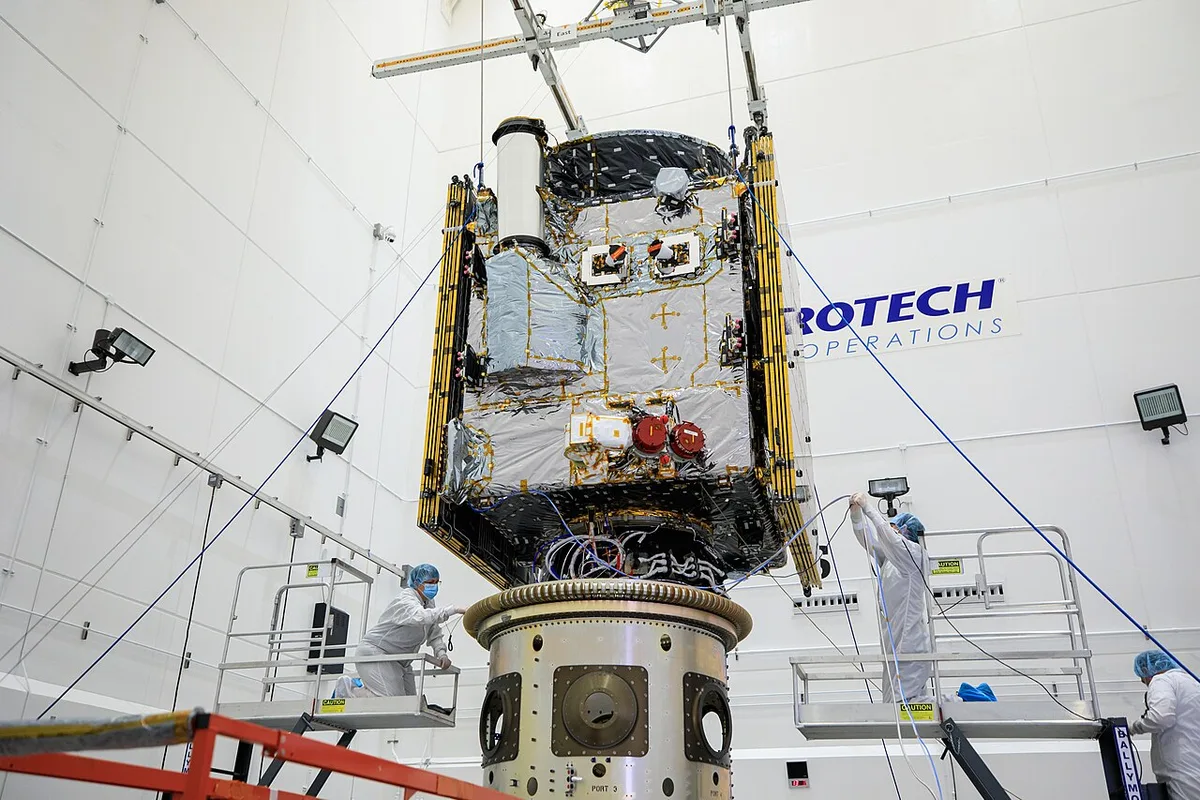
ESA reported on October 8 that Solar Orbiter had passed through a magnetic switchback in the solar wind and used particle measurements to investigate its origin. The analysis combines observations at the spacecraft with solar imagery and modeling. The report links the sampled material with processes near the Sun while also discussing changes as the structure travels outward. This is a study of a particular physical event, not a claim that every switchback now has a single fully settled explanation.
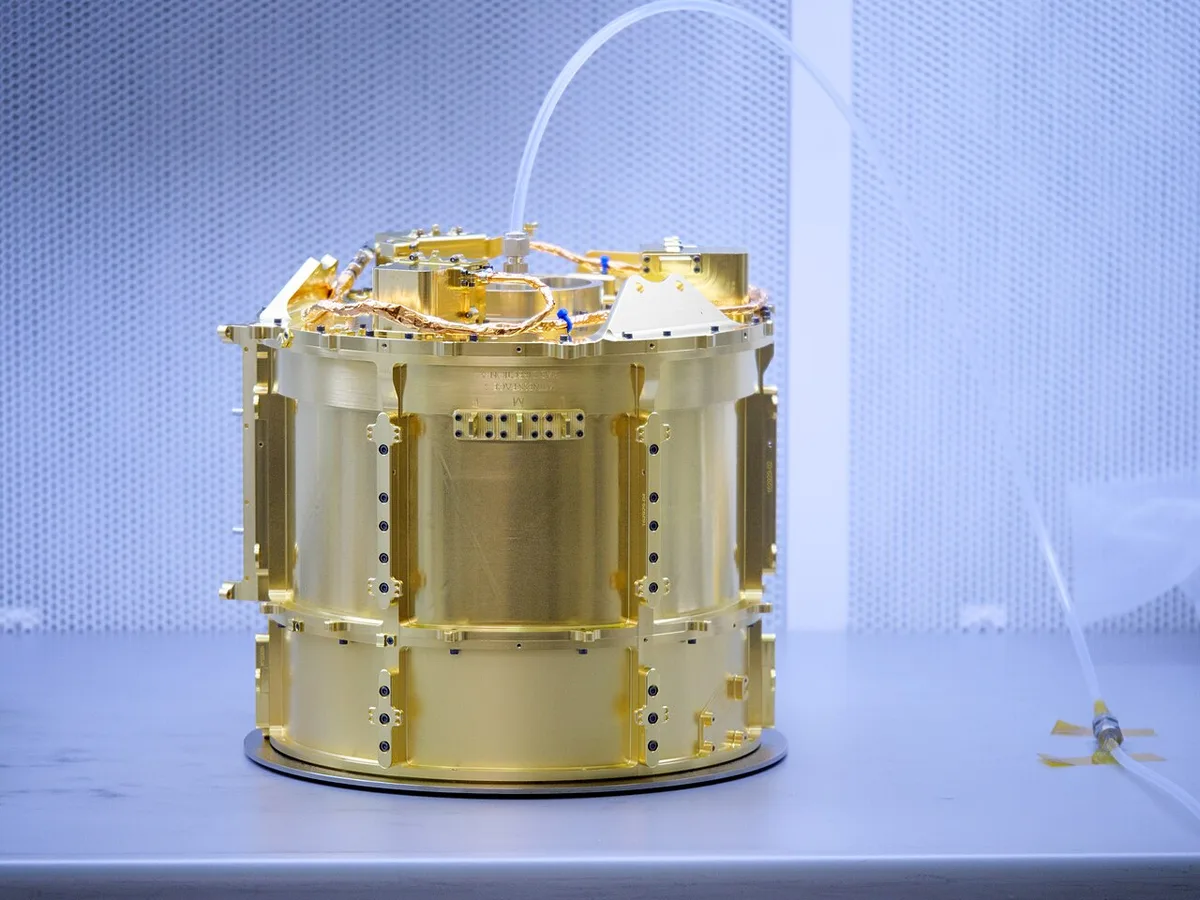
Its technological interest lies in the way different instruments contribute different evidence. A local sensor can measure material where the spacecraft is, while a remote imager provides context closer to the proposed source.
A magnetic field can change direction in flowing plasma
The solar wind is a stream of charged particles interacting with electromagnetic fields. Its magnetic structure is not a set of rigid wires, even though field lines are often drawn that way. The drawn lines represent a direction and relationship within the field, and their configuration can change.
A switchback describes a marked reversal or kink in that structure. Understanding it requires measurements of both fields and particles. A visual analogy can help readers imagine the shape, but it should not be mistaken for the physical mechanism. The plasma, its motion and the field evolve together, so an explanation has to connect the observed geometry with processes capable of producing and modifying it.
Particle fingerprints constrain a history
A sample of plasma can contain information about conditions experienced earlier. The relative populations of different ions and charge states can provide clues because those populations depend on physical processes such as heating and ionization. They are not a literal address label, but they can restrict the range of plausible origins.
The strength of that inference depends on how well subsequent changes are understood. A signature is most useful when researchers can explain which aspects are likely to persist and which may evolve during travel. This is why composition measurements belong alongside models and other observations. The conclusion is built from a chain of physical reasoning rather than from identifying one unusual particle and assigning it an unambiguous birthplace.
Remote and local measurements answer different questions
A camera looking toward the Sun can show structures across an extended region, but it does not directly sample every particle along the line of sight. An instrument at a spacecraft samples a small local environment, but it cannot simultaneously provide a complete image of the whole source region. Their limitations are complementary.
Combining the measurements can therefore improve an explanation, provided the timing and geometry are treated carefully. The material observed locally must be related to an earlier region through a model of travel and magnetic connection. This association can carry uncertainty. A responsible account states that uncertainty rather than allowing a compelling side-by-side image and graph to imply a direct visual tracking of the same material all the way from the Sun.
Models connect observations across a gap
A spacecraft and the solar surface are separated by a large region that is not continuously measured in complete detail. A model helps bridge that gap by representing the relevant physical relationships. Its role is to make a proposed connection testable, not to turn an unobserved interval into an observation.
Different assumptions can affect the reconstructed connection. Researchers can examine whether the proposed source remains plausible as those assumptions vary. Agreement with several independent measurements increases confidence. For readers, the useful question is which parts of the story were directly recorded and which were inferred through the model. Both can be scientifically valuable, but they should not be presented as the same kind of evidence.
More than one process can matter at different stages
An event can originate through one process and change through another as it travels. Competing explanations may therefore be incomplete rather than mutually exclusive. Distinguishing formation from later evolution can help reconcile observations that otherwise appear contradictory.
This is a general scientific lesson illustrated by traveling structures. A mechanism that explains how a disturbance begins does not necessarily describe its full later behavior. Conversely, a process observed far from the source may explain modification without explaining origin. A good analysis asks which stage each mechanism addresses and which measurements discriminate between them. That is more precise than forcing a complex sequence into a simple contest with only one possible winner.
Scientific understanding and forecasting are separate products
A better explanation of solar-wind behavior can contribute to future models, but it does not automatically establish a service that predicts an event’s effects on Earth. Forecasting requires timely observations, model evaluation and performance measures appropriate to the decisions users must make.
This distinction prevents an important research result from being inflated into an operational capability. Understanding a mechanism is one part of building a forecast, while showing that a forecast performs usefully is another. Readers should ask whether an announcement reports a physical explanation, a model improvement or an evaluated prediction system. The categories are connected, but the evidence needed for each is different.
How to read the next switchback result
Look for the measurement location, the instruments used and the method connecting those measurements with a source. Ask whether the study concerns one event or a larger population. A detailed case study can establish a plausible mechanism while leaving questions about prevalence open.
It is also useful to examine whether alternative explanations were considered. Strong research does not need every uncertainty to vanish; it needs a clear account of why the proposed interpretation fits the evidence better. This helps readers appreciate a result without turning a carefully bounded finding into a universal statement about the Sun’s behavior.
An instrument network rather than one magic sensor
Solar Orbiter’s study demonstrates the value of pairing different ways of observing. Local particles, magnetic measurements, remote images and models can each constrain a different part of an event. Their combined usefulness depends on knowing the strengths and limits of each.
The resulting explanation is more interesting than a headline about a mysterious shape alone. It shows how a spacecraft can use the material passing through its instruments to investigate a distant physical history. Following the research means watching how that method performs across additional events, while keeping a proposed source connection distinct from direct observation and a scientific advance distinct from an operational forecast.
Sources & further reading
Primary references inform the reporting. Our explanations, scenarios, and conclusions are editorial analysis; source statements are not independent test results.
Source publication or reference date: 2026-10-08.
See an error or an important update? Contact the editors.