- NASA reports initial TRACERS science results and explicitly identifies further measurements as important.
- A single moving sensor can confuse spatial structure with change over time.
- Paired measurements are powerful only when timing, calibration and geometry are understood.
The first-result announcement
NASA reported on October 29 that TRACERS researchers had analyzed initial measurements concerning magnetic reconnection in Earth’s space environment. The mission uses two satellites passing through related regions, allowing comparisons that a single trajectory would make harder. The agency describes an early finding and says further measurements will help confirm it. That is a research result with an explicit next step, not an announcement that geomagnetic storms can now be predicted perfectly.
The mission highlights a problem that appears in many fields: a moving observer can detect a change without immediately knowing whether the environment changed over time or the observer simply moved into a different part of it.
A single track mixes place and time
Imagine a vehicle measuring air temperature along a road. If the temperature rises during the journey, the cause could be warming weather, a warmer location or both. One moving sensor records a sequence, but that sequence alone may not separate those explanations.
A spacecraft faces a similar ambiguity while crossing a structured plasma environment. The measurements vary as the vehicle travels and as the environment evolves. Interpreting every variation as a temporal event could produce a misleading picture. Recognizing this ambiguity is the first step toward designing observations that can resolve it, which is why spacecraft formation and timing can be as important to a scientific question as the sensitivity of an individual instrument.
A second measurement creates a comparison
Two spacecraft can sample related conditions at different times or locations. Comparing their records offers a way to test whether a feature persists, moves or changes. The relationship between the trajectories determines which distinctions are most accessible.
The comparison is not automatically decisive in every case. The environment can evolve between the two observations, and the spacecraft may not pass through exactly the same physical region. A good analysis uses known geometry and timing to identify what the pair can establish. The benefit comes from an intelligently designed comparison, not merely from doubling the number of sensors and assuming uncertainty has been halved.
Reconnection links fields and particle behavior
Magnetic reconnection concerns changes in magnetic structure that allow energy and plasma behavior to change in important ways. In the near-Earth environment, it is part of the interaction between the solar wind and Earth’s magnetic system. Understanding it requires more than drawing field lines that meet and separate.
Particles and fields provide complementary evidence about the process. A local measurement records what reaches the instrument, while the broader interpretation concerns a changing region. The analysis needs to connect those scales carefully. This is why a mission can produce valuable particle observations without directly filming the entire reconnection process as an ordinary visible event. Instrument data and a physical model together support the explanation.
Timing must be accurate enough for the question
A comparison between satellites depends on when each observation occurred. If timestamps are uncertain relative to the timescale of the phenomenon, apparent differences can become difficult to interpret. Synchronization is therefore part of scientific capability, not merely a data-management convenience.
The same principle applies when combining measurements from different instruments on one vehicle. A field change and a particle change may appear related, but their timing relationship needs to be preserved. Data processing should retain the information needed to align them appropriately. A mission designed around coordinated observations must verify that the entire measurement chain supports that coordination, from sensor sampling through the final archived record.
Calibration differences can imitate environmental differences
Two instruments may respond slightly differently even when observing the same physical condition. If that difference is not understood, an analysis could attribute it to the environment. Paired missions therefore need careful calibration and comparison of instrument behavior.
This does not require the instruments to be perfectly identical. It requires their differences to be characterized well enough for the intended inference. Reference periods and appropriate cross-checks can help. For readers, the practical question is whether the observed contrast is larger and more structured than the known measurement uncertainty. Without that relationship, the mere existence of two traces is not enough to establish that the environment behaved differently at the two locations.
Early results need additional cases
An initial analysis can reveal a compelling pattern while still sampling a limited set of conditions. Further observations test whether the interpretation remains useful when the environment changes. This is especially important for a process influenced by both local geometry and changing upstream conditions.
A new dataset might strengthen the original explanation, reveal a boundary or motivate a revised account. None of these outcomes should be treated as a failure of the idea that early results are useful. The value of an initial finding lies partly in making a more precise question available for subsequent work. Clear reporting preserves that provisional status rather than presenting the first publication as the final word.
What the result does not automatically provide
A scientific account of a process can support better models over time, but operational forecasting requires separate evaluation. Users of a forecast need to know lead time, reliability and the consequences of uncertainty. Those characteristics are not established by one explanatory study alone.
Readers should therefore separate understanding from service readiness. TRACERS can contribute important evidence about how energy enters Earth’s magnetic environment without having solved every practical prediction problem. This is a more accurate and more useful claim than either dismissing the work as purely academic or promising immediate protection for every technology affected by space weather.
A useful chart should show the spacecraft separation and time offset alongside the compared measurements. Those labels let a reader see the basis of the inference rather than treating the curves as interchangeable recordings. Geometry becomes part of the evidence when the scientific question depends on the relationship between observers.
The broader value of paired observation
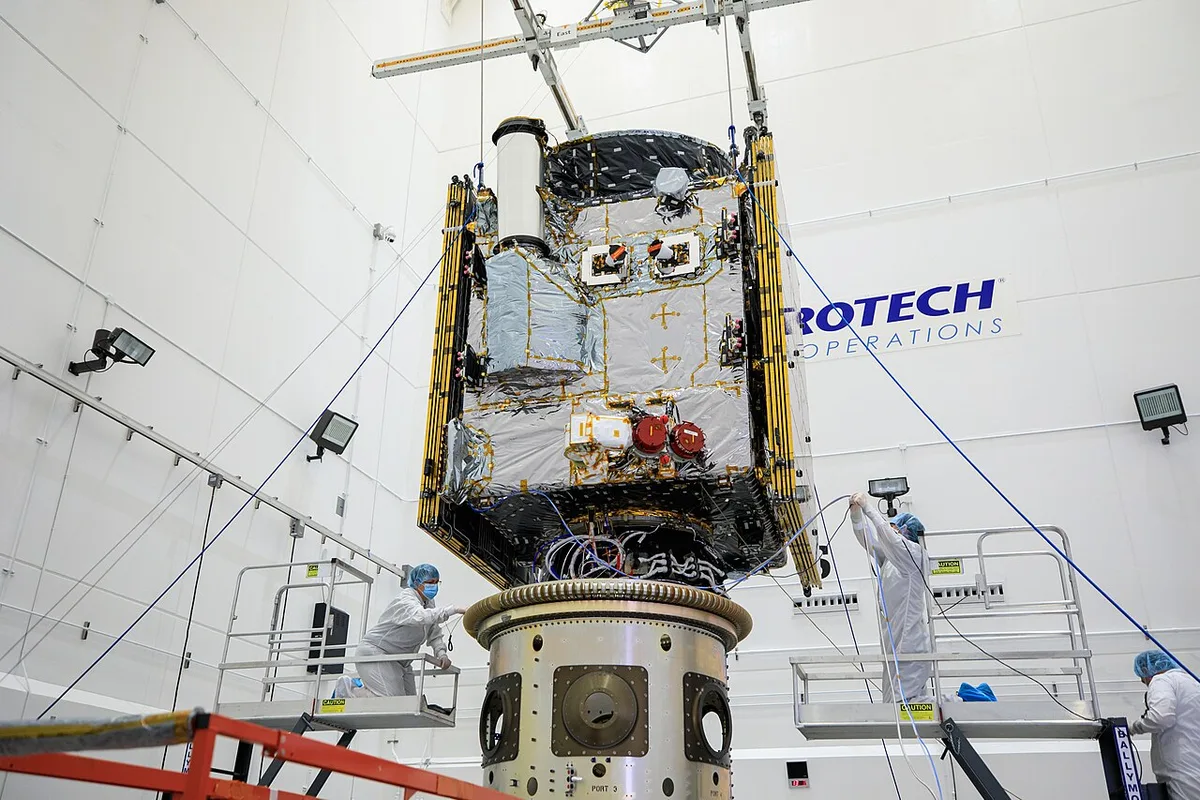
TRACERS illustrates how a scientific question can shape a mission’s architecture. The second spacecraft is not merely a backup; it creates a different kind of comparison. Its value emerges through the relationship between observations, supported by timing, geometry and calibration.
For technology readers, that is a transferable lesson. Better information sometimes comes from arranging measurements differently rather than making one sensor more precise. NASA’s early result should be followed through additional evidence and clearly bounded interpretation. The enduring achievement is a stronger way to ask whether a changing record reflects a changing place, a changing time or a combination of both.
Sources & further reading
Primary references inform the reporting. Our explanations, scenarios, and conclusions are editorial analysis; source statements are not independent test results.
Source publication or reference date: 2026-10-29.
See an error or an important update? Contact the editors.